Forrester Introduces Concept Of Least Agency For AI Agents
Forrester says least privilege is not enough for AI agents, proposing least agency to limit their decision-making power. This new approach aims to prevent AI agents from doing harm even with proper permissions.
Original reporting · forrester.com
Original: “AI Agents Need More Than Least Privilege — They Need Least Agency”
Read “AI Agents Need More Than Least Privilege — They Need Least Agency” at Forrester →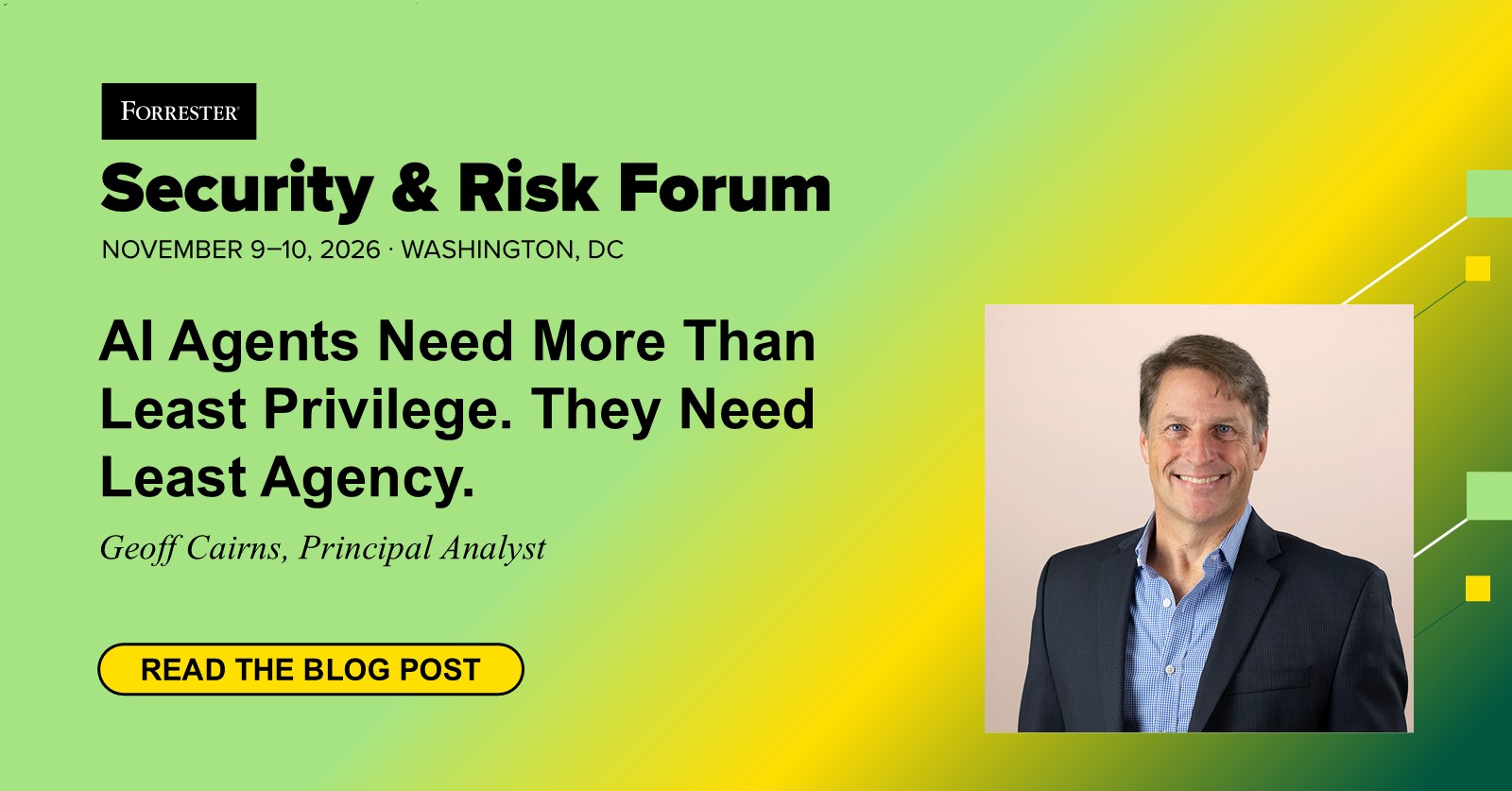
How this was written. Voyager Commercial wrote this article with a language model from Forrester’s reporting (model: @cf/meta/llama-3.3-70b-instruct-fp8-fast); it describes that reporting rather than adding to it. The original, linked above, is the full story.
Key points from Forrester’s report
- Forrester proposes the concept of least agency to limit the decision-making power of AI agents
- Least agency is an extension of the principle of least privilege, governing not just access, but also authority and autonomy
- Implementing least agency requires integrating security domains, including identity and access management, AI governance, and runtime security
- Least agency is crucial for preventing AI agents from causing harm, even with proper permissions
- Forrester will be providing further guidance on implementing least agency in an upcoming track session
Cybersecurity professionals have long relied on the principle of least privilege to manage access, but this approach has limitations when it comes to AI agents. According to Forrester, AI agents can still cause problems even with the right permissions. The issue is not just about access, but also about the decisions and actions these agents can take.
Forrester notes that least privilege primarily focuses on constraining access to resources, but AI agents introduce new challenges. They can make decisions, use tools, and act independently, which requires a new approach to security. This is where the concept of least agency comes in, which is designed to govern not just access, but also authority and autonomy.
Least agency is about giving AI agents only the necessary decision-making power and autonomy to perform their tasks. This means continuously monitoring and adjusting their access, authority, and autonomy to ensure they do not exceed their intended purpose. Forrester emphasizes that least agency is not a replacement for least privilege, but rather an extension of it.
Achieving least agency in practice is a complex challenge. It requires finding a balance between giving AI agents enough power to accomplish their objectives and preventing them from causing harm. If an agent is too tightly constrained, it may not be able to perform its intended function, but if it has too much autonomy, it can produce unsafe outcomes.
To implement least agency, organizations need to integrate security domains, including identity and access management, AI governance, and runtime security. This integration enables continuous monitoring and control of AI agents, allowing for adjustments to be made as context and risk change. Forrester's AEGIS framework for AI security provides a foundation for implementing least agency.
Forrester will be exploring the concept of least agency further in an upcoming track session at its Security & Risk Forum. The session will discuss how security teams can operationalize least agency and provide guidance on implementing this new approach. Forrester clients can also reach out for more information and guidance on this topic.
The concept of least agency has significant implications for organizations using AI agents. It highlights the need for a more nuanced approach to security, one that takes into account the unique challenges posed by AI agents. By implementing least agency, organizations can reduce the risks associated with AI agents and ensure they are used safely and effectively.
Questions and answers
What is least agency?
Least agency is a concept proposed by Forrester to limit the decision-making power of AI agents, governing not just access, but also authority and autonomy.
Why is least agency necessary?
Least agency is necessary because AI agents can still cause problems even with the right permissions, and it helps to prevent them from exceeding their intended purpose.
How can organizations implement least agency?
Organizations can implement least agency by integrating security domains, including identity and access management, AI governance, and runtime security, and continuously monitoring and adjusting AI agents' access, authority, and autonomy.



