Salesforce Develops Launa-Omni Voice Model For Real-Time Conversations
Salesforce's Launa-Omni voice model enables real-time, two-way conversations, aiming to make interactions with AI more natural and accurate. This technology is designed for enterprise work, where reliability and precision are crucial.
Original reporting · salesforce.com
Original: “Meet Launa-Omni, Salesforce’s Voice Model for Real-Time Conversation”
Read “Meet Launa-Omni, Salesforce’s Voice Model for Real-Time Conversation” at Salesforce Blog →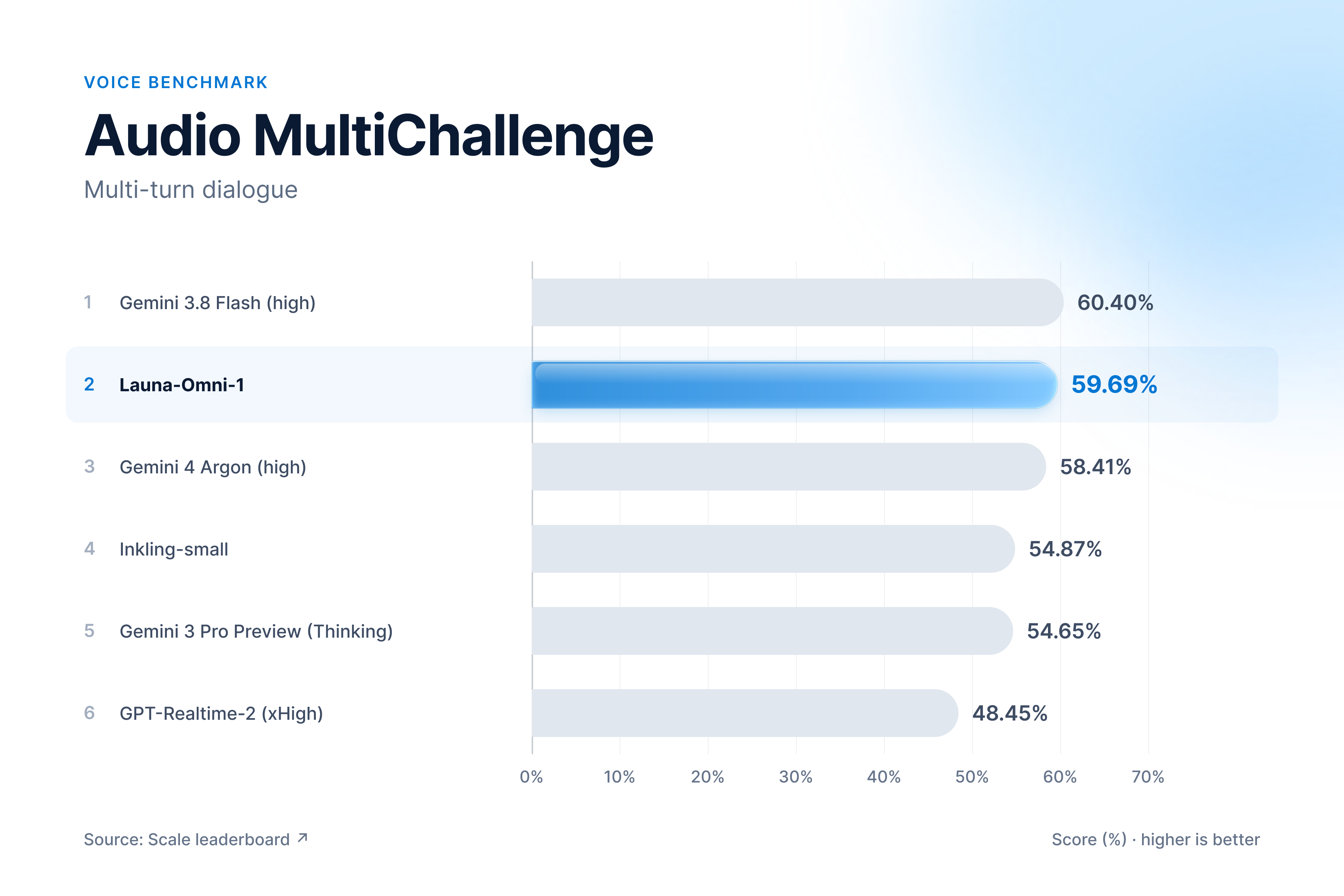
How this was written. Voyager Commercial wrote this article with a language model from Salesforce Blog’s reporting (model: @cf/meta/llama-3.3-70b-instruct-fp8-fast); it describes that reporting rather than adding to it. The original, linked above, is the full story.
Key points from Salesforce Blog’s report
- Salesforce's Launa-Omni voice model enables real-time, two-way conversations with AI systems.
- The model is designed for enterprise work, where reliability and precision are crucial.
- Launa-Omni's approach is different from other voice systems, using a single audio-adapted text model for more seamless conversations.
- The model has been evaluated on several benchmarks, showing competitive results with other leading voice models.
- Launa-Omni can be paired with other models to provide more flexibility and capabilities in complex task management.
Salesforce AI Research has created a voice model called Launa-Omni, which allows for real-time conversations. This model is designed to facilitate more direct communication with AI systems. The goal is to make interactions with AI feel more intuitive and natural.
Launa-Omni is an omni voice model, meaning it can handle a wide range of tasks and conversations. Its core is based on a text model that has been adapted for audio, allowing speech and language to share a common space. This approach enables the model to better understand and respond to user input.
The model is designed to be smaller and more efficient than other leading voice models, while still maintaining high-quality voice interactions. This is achieved through a careful balance of voice quality, speed, and cost. As a result, Launa-Omni is well-suited for enterprise-scale applications.
Launa-Omni has several key features that make it suitable for enterprise use. It can respond promptly to user input, handle precise information, and provide visible and steerable behavior. These qualities are essential for applications where conversations need to lead to specific actions or decisions.
The model's real-time harness detects when a user has finished speaking and determines when to respond. This helps to keep conversations moving and ensures that the system can respond promptly. Additionally, Launa-Omni can be customized and fine-tuned to better handle specific types of information, such as named entities and industry jargon.
Launa-Omni's approach is different from other voice systems, which often rely on separate speech recognition, language, and speech generation models. Instead, Launa-Omni uses a single audio-adapted text model, which allows for more seamless and natural conversations. This approach also provides more visibility into how the model responds to user input, making it easier to inspect and correct errors.
The model has been evaluated on several benchmarks, including Audio MultiChallenge, VoiceBench, and τ³-Voice. The results show that Launa-Omni is competitive with other leading voice models, despite being significantly smaller in size. This demonstrates the potential of Launa-Omni for a wide range of applications, from customer service to complex task management.
Questions and answers
What is Launa-Omni?
Launa-Omni is a voice model developed by Salesforce AI Research, designed for real-time conversations with AI systems.
How does Launa-Omni work?
Launa-Omni uses a single audio-adapted text model, which allows for more seamless and natural conversations. It also includes a separate text-to-speech model to generate spoken responses.
What are the potential applications of Launa-Omni?
Launa-Omni has potential applications in customer service, complex task management, and other areas where natural and accurate conversations with AI systems are essential.